More than twenty thousand variants from the ERP - every night, without losing a single product.
Website · Shop · ERP integration
Wrzeciono (with Brand You Much)
Live · catalogue sync since June 2026
Development · Integration
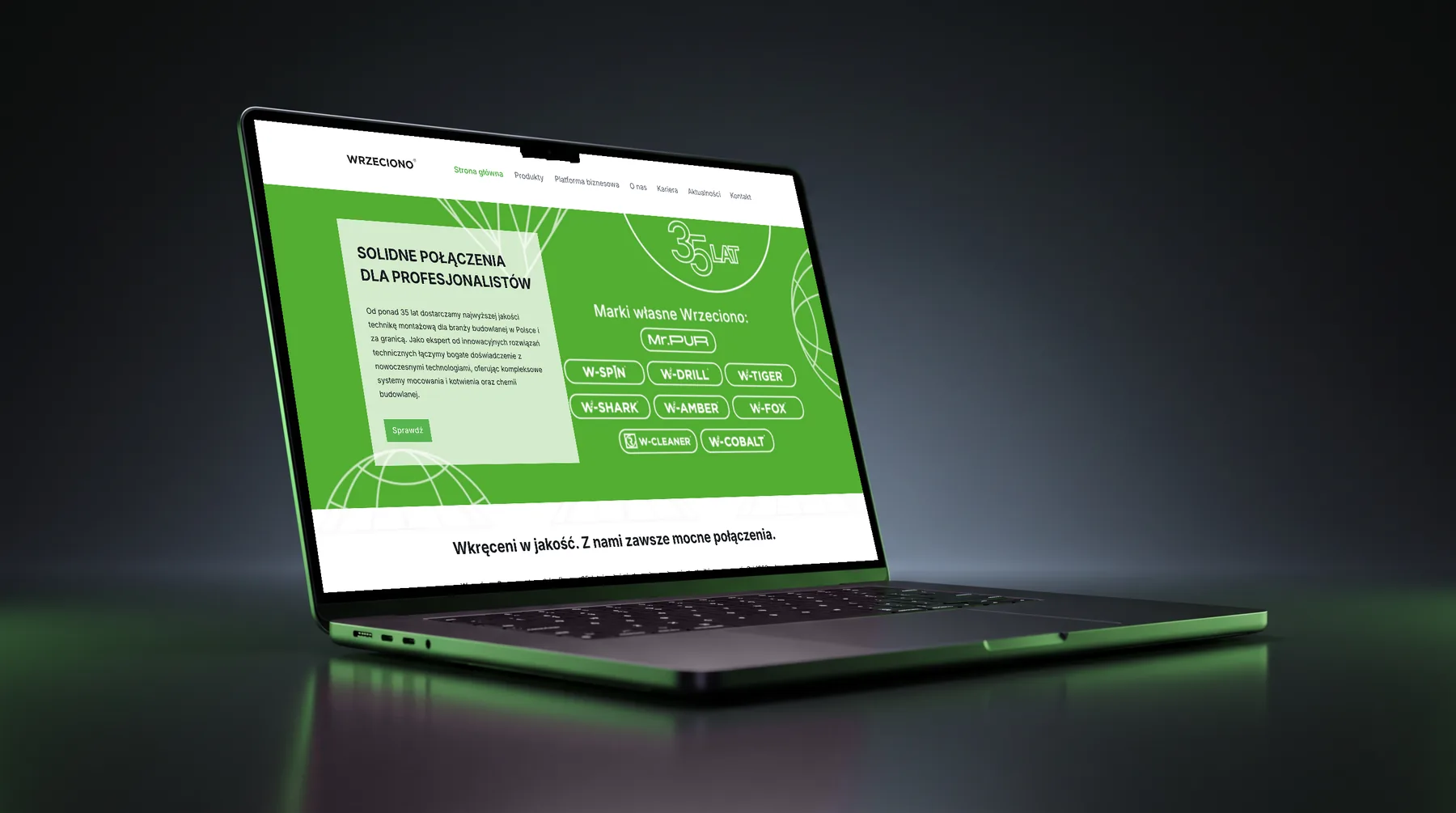
The film
From an ERP export to a shop that stays in sync on its own - Wrzeciono in just over a minute.
At a glance
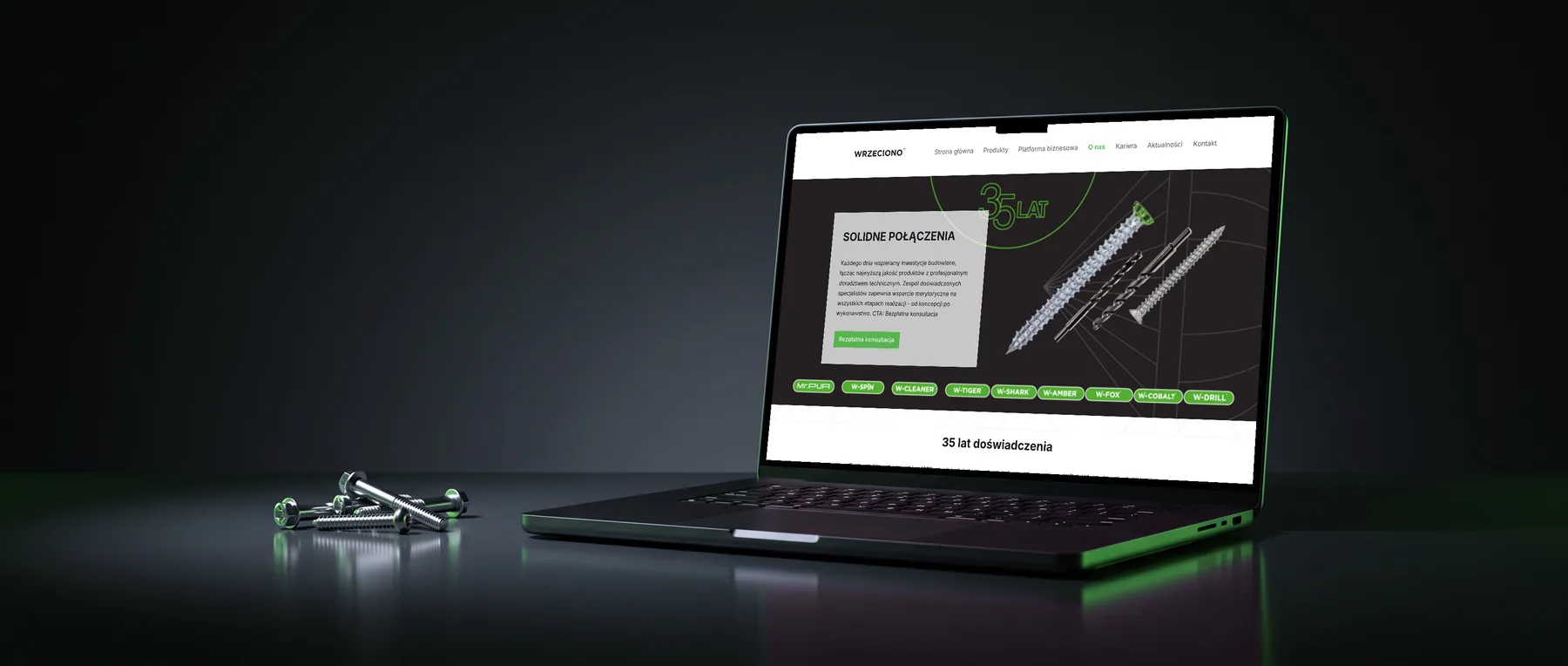
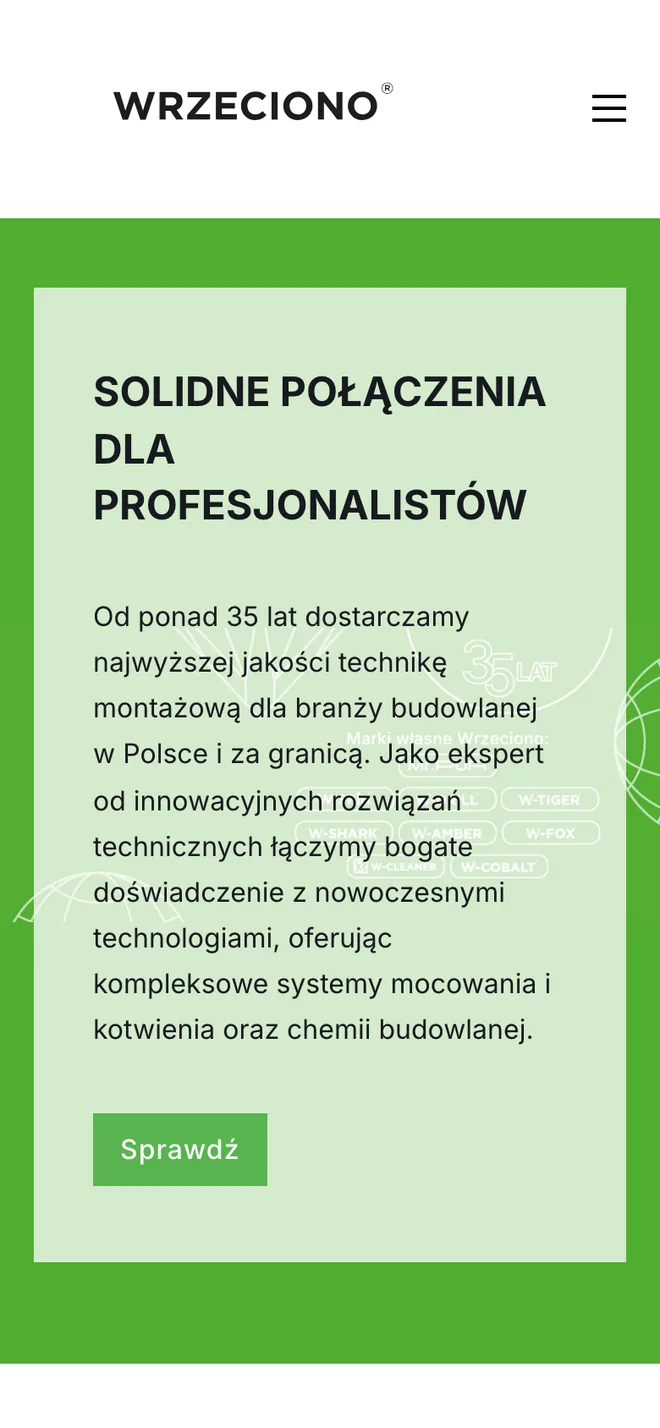
For Wrzeciono - a Polish distributor of fixings, anchors and construction chemicals - I built the website and shop designed by the Brand You Much agency, and the connection that fills it with the company’s whole catalogue straight from its ERP, every night.
01 - The problem
A catalogue too big to keep up to date by hand.
Wrzeciono supplies screws, anchors, fixings and construction chemicals to professionals, including its own product brands. Every product comes in many sizes and pack quantities, so the catalogue counts tens of thousands of positions - and all of them live in the company’s ERP, which also runs its business platform for trade customers.
The new website and shop, designed by the Brand You Much agency, had to show that whole catalogue with photos, variants and data sheets - and stay in step with the ERP without anyone copying products by hand. On top of that, offers printed from the B2B platform link to products only by their index, and those links had to keep working in the new shop.
02 - The vision
The ERP is the source of truth. The shop just follows - reliably.
Three principles drove every decision:
- One source of truth. Products, variants, categories, photos and documents come from the ERP. The shop never invents data - when something is missing, it is reported back with evidence instead of patched by hand.
- A sync that cannot get lost. A full sync of the catalogue is a long job, and shared hosting likes to cut long jobs short. The sync saves a checkpoint after every batch, resumes where it stopped and keeps its memory use flat from the first product to the last.
- Every old link still works. An index from a printed B2B offer, typed into any address of the shop, leads straight to the product - and to the right size of it. Indexes that do not match anything land on search and in a log, which doubles as a report of differences between the platform and the shop.
03 - Who it’s for
Built for professionals who know the index - and the team that runs the catalogue.
Builders and installers
They look for one anchor in one size. Variant tables show every size and pack quantity of a product, with a filter, on a single page.
Trade customers
They work from offers printed by the B2B platform. A link with an index from such an offer opens the right product in the shop.
Engineers and buyers
They need the technical data sheet. Documents from the ERP appear on the product page, separate from the photos.
The Wrzeciono team
Edits products once, in the ERP. A panel in the shop shows the sync, rebuilds categories with one click and can reset and re-import everything safely.
04 - Technology & the challenge
A visual site for the designers, and two custom plugins for the data.
The website and shop are built in a visual page builder, so the agency’s designers can keep shaping pages after launch. The data side is mine and lives in two custom plugins: one that synchronises the catalogue with the ERP, and one that turns each product’s variants into a filterable table.
The hard part was scale and trust. Three full syncs in a row stopped at random points; the logs showed no errors in the code - the hosting simply cut the long request. The answer was a sync that saves its place, ignores the cut and carries on. The ERP keeps photos on variants, not on products, so parent products now take a photo from one of their variants. And before the final full import, the ERP export itself was checked: 442 duplicated indexes and 61 missing files went back to the ERP provider as reports with evidence, and were fixed on their side.
05 - The workflow
Probe. Sync. Clean. Keep in step.
It started with a read-only probe of the ERP’s interface and a snapshot of every endpoint, so every later question to the ERP provider came with evidence. Then the sync got its resilience, the category tree and the photo rules, the export was cleaned up on both sides, and the whole catalogue was imported again from zero with no errors. Data sheets followed, then redirects for indexes from printed offers. A security review after this autumn’s critical PHP vulnerabilities removed leftover migration files and closed an old remote interface nobody used.


06 - Feature highlights
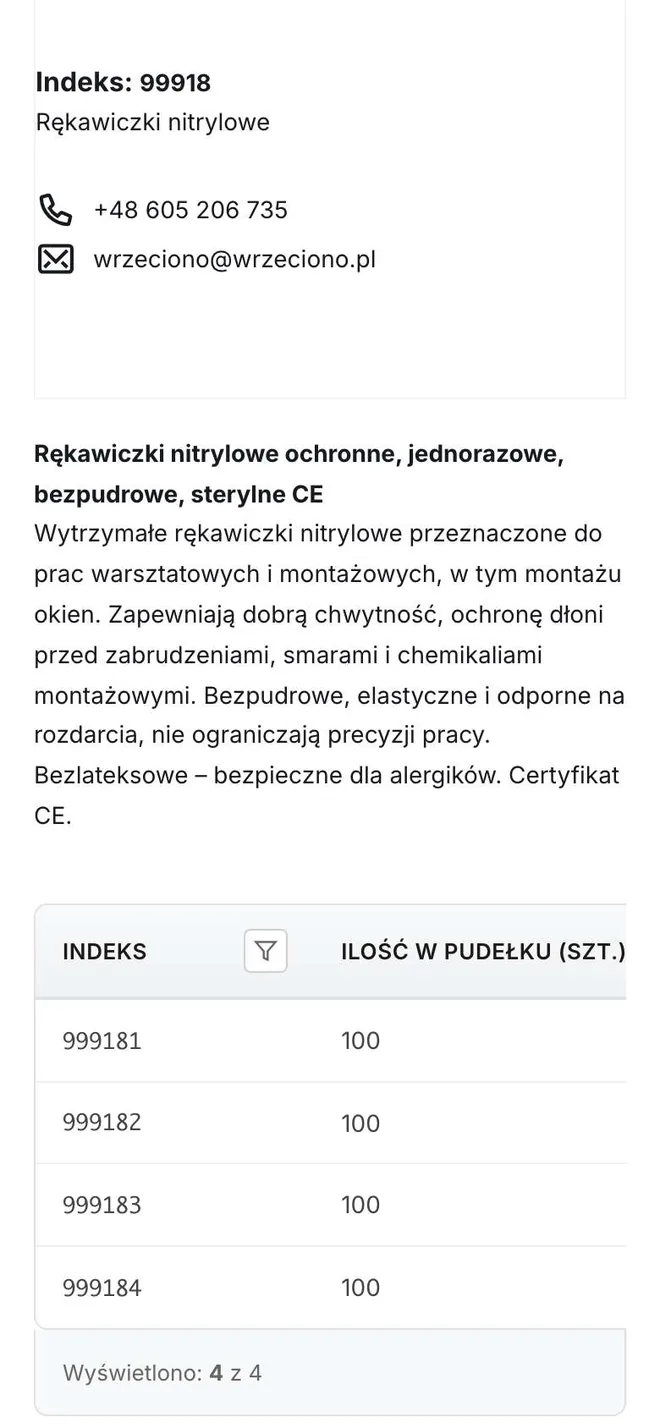
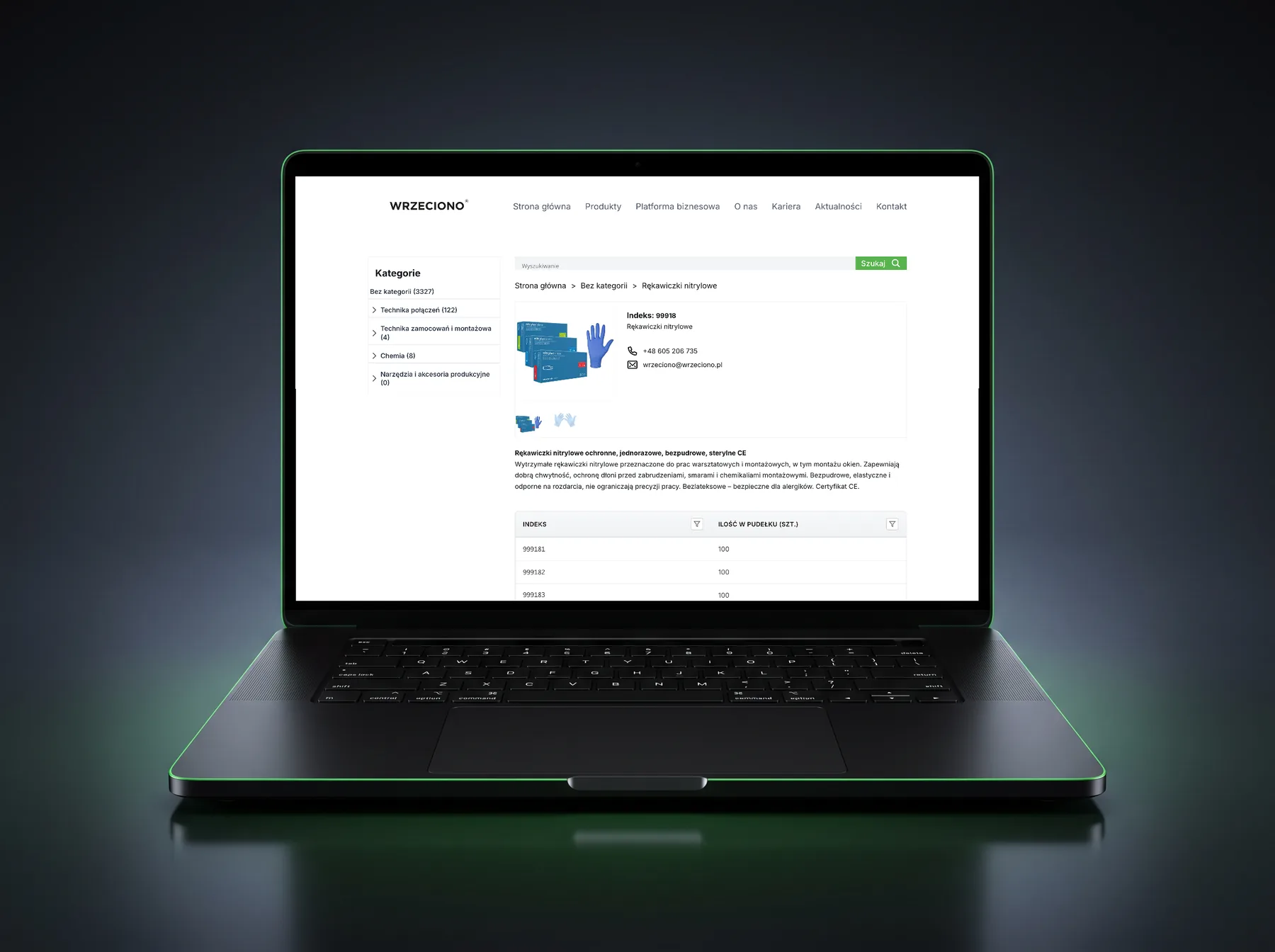
One product page, every size of it.
A product with dozens of variants is one page with one table: index, pack quantity and filters, built automatically from what the ERP sends.
+ Data sheets from the ERP
The ERP sends photos and documents through the same channel. The sync tells them apart, so PDFs never end up as product photos and appear on the product page as files to download.
+ A safe reset button
A hard reset with a choice of what to clear - products, synced media, categories, caches - so a full re-import starts from a clean state instead of piling duplicates on top of old data.
07 - Results
A shop that stays in step with the ERP on its own.
Wrzeciono runs on wrzeciono.pl with the full catalogue from the ERP, refreshed every night, variant tables and data sheets on product pages, and old printed offers that still lead to the right product.
Like what you see?
Let’s build the next one.
From a blank page to a working product - AI, automation, full-stack engineering. Get in touch and let’s talk about your idea.